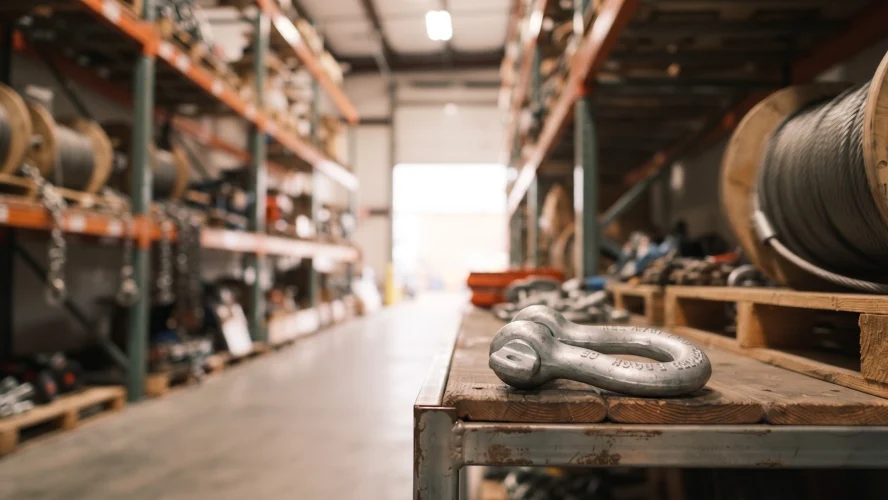
Bow shackles explained: how to choose and use them safely for lifting
Written by: Brett Penn
Reviewed by: Keble’s Trading Technical Team
Updated: 15 July 2026
TL;DR
- A bow shackle suits many lifting and rigging connections because of its wide body, but the shape alone does not make it safe to lift with.
- Before you buy, check the marked working load limit (WLL), grade, pin type and manufacturer information, not just the size or finish.
- Genuine lifting shackles always have a pin thicker than the body. If the pin and body are the same diameter, it is commercial-grade hardware, not a lifting shackle.
- Never weld, grind or repair a shackle. Take it out of service if the pin is damaged, the body is worn, or the markings are unreadable.
- Not sure which shackle suits the job? Call Keble’s Trading on 1800 067 687 or send photos of the markings and application before you order.
Bow shackles turn up in almost every lifting and rigging job Keble’s Trading quotes on, from a builder connecting a sling to a steel beam to a transport operator securing a load for the highway. The shape is familiar enough that buyers often order by size and finish alone. That is where the trouble starts.
A bow shackle is only as safe as the rating behind it, the pin fitted to it, and the load path it is asked to carry. This guide covers what to check before you order, how to tell a genuine lifting shackle from a commercial one, and when a bow shackle is the wrong choice altogether.
What is a bow shackle?
A bow shackle is a U-shaped connector with a wide, rounded body and a removable pin, sometimes called an anchor shackle. The wider bow gives more room inside the body than a narrower D shackle, which is why it suits connections where a sling eye, hook or more than one fitting needs to sit together without binding.
That extra room is a design feature, not a safety guarantee. A bow shackle can still be side loaded, shock loaded, fitted with the wrong pin, or forced into a connection it was never designed for. Choosing bow over D shackle comes down to how the load enters the connection and what else is attached to it, not personal habit or what is already in the ute.
Can a bow shackle be used for lifting?
Yes, but only when that specific shackle is rated, marked and matched to the job in front of you. Australian guidance on rigging equipment treats shackles as identifiable lifting fittings with their own markings and grading, not generic hardware you pick by eye. NSW Government dogging and rigging guidance groups lifting shackles into dee and bow types manufactured to the Australian shackle standard, with grading that determines what load the shackle is fit to carry.
Before you order, check:
- the working load limit (WLL), stamped on the body
- the grade and manufacturer marking
- the pin type and condition
- the body condition: no stretching, bending, cracking or heavy corrosion
- whether the connected sling, hook or fitting actually matches the shackle and the direction of the load
- whether the job needs documentation such as a certificate or traceability record
- whether the application involves vibration, rotation, shock loading, or a corrosive environment
If you cannot confirm those points from the product in front of you, do not guess.
Send us a photo and we’ll tell you straight. Call 1800 067 687 or contact us with the markings and application.
How do you spot a genuine rated shackle versus a commercial one?
Check the pin. On a genuine lifting shackle, the pin is always thicker than body, because the pin carries more load in bending and shear than the body does. If the pin and body look the same diameter, treat it as commercial-grade hardware: unrated, unmarked, and not built for lifting or load restraint.
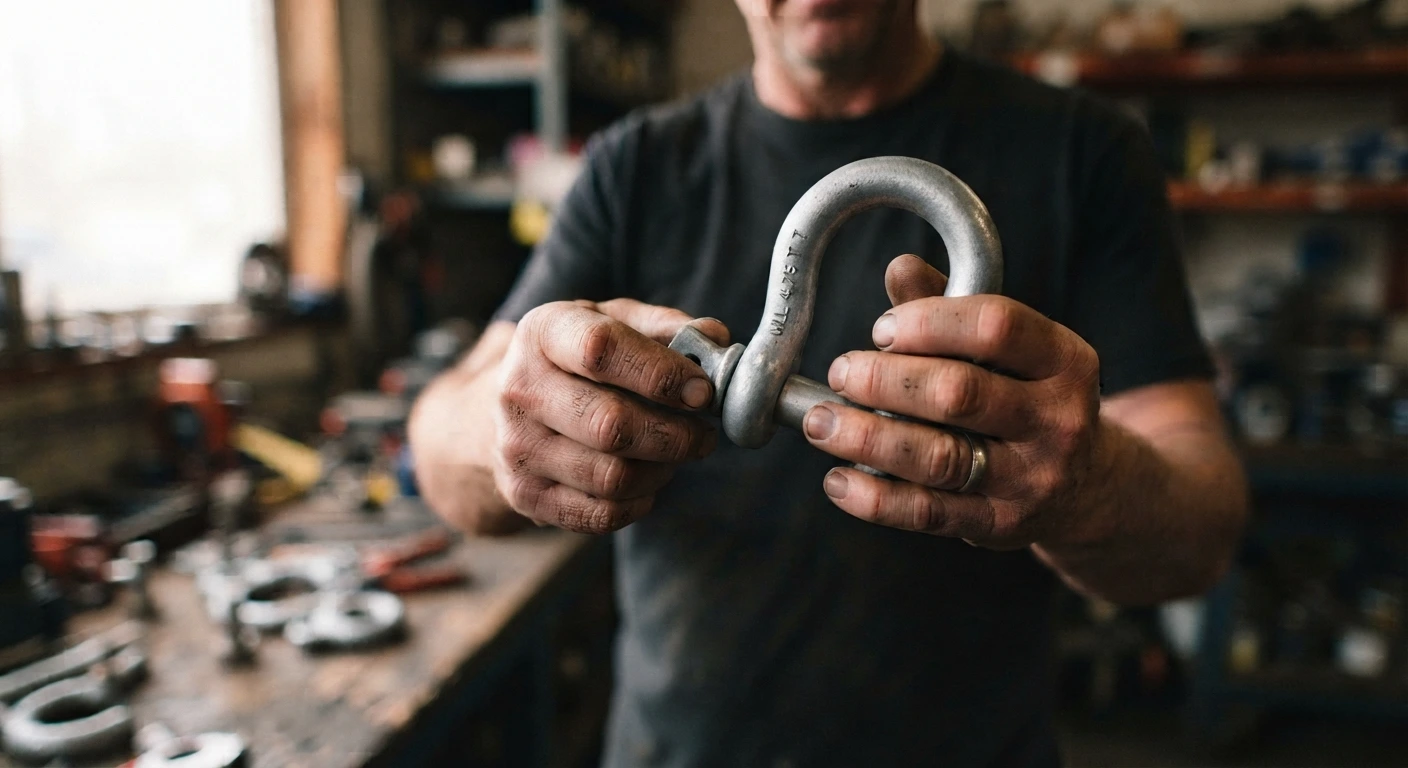
This distinction matters more than most buyers expect, and it is not just a stainless steel issue. A transport operator recently called Keble’s Trading wanting to bulk-order zinc-plated commercial shackles to secure structural handrail packs onto a flatbed trailer for interstate transport. The shackles looked the part and the price was right, but they were never rated for load restraint. Our team flagged the risk before the order went through and moved him onto certified, batch-inspected rated shackles instead, avoiding a load-restraint compliance problem before it reached the road. Our guide on certified bow shackles covers why that certification step matters beyond just this one case.
The same logic applies to stainless steel. Stainless is a strong choice for corrosion resistance in balustrade, marine and architectural work, but the material name tells you nothing about lifting suitability. A stainless shackle still needs its own WLL, grade and manufacturer data checked before it goes anywhere near a load. Certificates and finish are not proof on their own. We have seen suppliers oversell the quality of a product without actually verifying it, and the only way to avoid that trap is to check the physical rating yourself, or ask us to check it with you.
Not sure what you’re holding? Send a photo of the pin, the body and any markings to Keble’s Trading and we’ll tell you plainly whether it is rated for the job, no guesswork required. Call 1800 067 687 or send us photos before you use it.
Screw pin or safety pin: what’s the difference?
A screw pin shackle threads directly into the body and suits connections that get assembled and removed often. It should be hand tightened, then given a quarter turn back so it can still be undone once the load comes off. Where vibration or movement is likely, mousing the pin to the body stops it working loose over time.
A bolt-type or safety pin shackle uses a bolt, nut and split pin arrangement instead. It takes longer to assemble, but it holds its position better in longer-duration connections or where the shackle cannot be easily inspected in use. Neither pin type is universally correct. The choice comes down to how often the connection is made and broken, and what the site or manufacturer documentation calls for.
Weighing the screw pin against the safety pin for your job? Call 1800 067 687 and we’ll help you narrow it down.
Inspection: what to check before you use a shackle
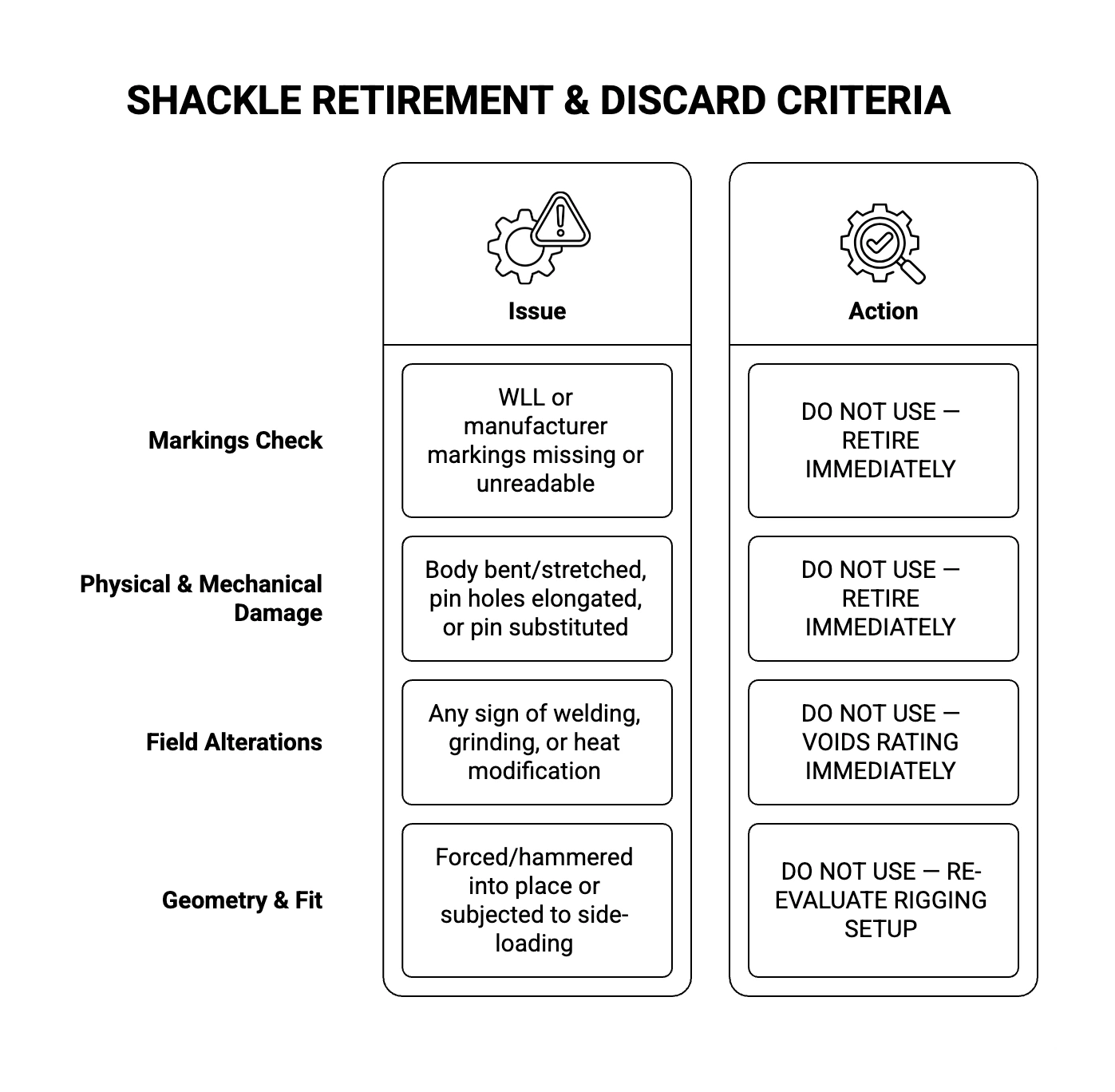
Check the shackle every time before use, not on a schedule you remember when convenient. Look for:
- unreadable or missing WLL and manufacturer markings
- a bent, twisted or distorted body
- elongated pin holes or eyes
- a damaged, worn or mismatched pin
- cracks, gouges or sharp wear marks
- corrosion, pitting or heat damage
- any sign of welding, grinding or repair
That last point is worth taking seriously. A trade customer once called Keble’s Trading asking for a replacement latch after he had personally welded an unbranded hook onto an already-certified lifting chain sling. The field weld had voided the assembly’s rating the moment it was applied, whether or not it looked solid. Our team took the sling into the workshop, removed the non-compliant weld, fitted a certified safety hook using proper connecting links, and proof-tested the full assembly back to standard before it went back into service. Do not weld, grind, straighten or swap a pin in the field. If a shackle needs repair, that is a job for a workshop process that ends in re-certification, not a field fix.
Found a defect and need a replacement fast? Contact Keble’s Trading or call 1800 067 687, we can help source the right part before the job stalls.
Avoid side loading and shock loading
A shackle is designed to carry load along a specific axis through the pin and body. Side loading happens when the load pulls across the shackle instead, and it changes how the shackle behaves under tension even if the WLL looks adequate on paper. The same principle applies to multi-leg slings gathered into one shackle: a bow shackle is only rated to take two sling legs up to a 60 degree limit between them, and spreading the legs wider than that sharply increases the tension each leg puts through the shackle.
Warning signs include the body sitting crooked once tension is applied, a sling eye riding up over another component, or a shackle that only fits after forcing or hammering. If it looks awkward on the bench, it will not improve once weight goes on.
Shock loading is the other common failure point: a load that drops suddenly into tension, a crane movement that snatches, or a suspended load that shifts without warning. These place force on the shackle well beyond a calm, steady lift. Buying on WLL alone assumes a controlled lift. If the job involves repeated cycles, awkward centres of gravity, or plant movement, that context needs to be part of the shackle conversation, not an afterthought once the gear is on site.
Who is responsible for approving the lift?
The responsible person is whoever is licensed and competent to judge the lifting gear and the slinging method for that specific job, not the supplier who sold the shackle. In Victoria, selecting and inspecting lifting gear and judging a slinging method is defined as dogging work under the Occupational Health and Safety Regulations, and it requires a dogging high risk work licence unless the slinging technique has already been predetermined by a suitably qualified person. Keble’s Trading can help you select and source the right hardware. We cannot approve a lift, sign off a rigging plan, or replace the judgement of the licensed person running the job.
When should you not use a bow shackle?
Do not use a bow shackle for lifting or load restraint when:
- the WLL or manufacturer markings are missing or unreadable
- the pin is damaged, loose, mismatched or has been substituted
- the body is bent, stretched, cracked or heavily corroded
- it has been welded, ground or repaired outside an approved process
- the load path would side load the shackle
- it only fits after forcing, packing or hammering
- the connected components do not match the shackle’s geometry
- the job needs documentation you do not have on hand
A bow shackle used and selected correctly is a genuinely useful connector. It is not a substitute for the right part when the connection calls for something else.
What should you send Keble’s Trading before asking for help?
Send photos of the existing shackle, including all visible markings, the pin, and the connected components. A clear photo does more for a fast, accurate answer than a phone description ever will.
Alongside the photos, include:
- the required WLL if you know it
- the load type and approximate weight
- the intended load direction
- whether vibration, movement or repeated lifting is involved
- the environment: coastal, wet, chemical or abrasive
- any site documentation requirements
- whether you are after a screw pin, safety pin, or need help comparing the two
This is how our team narrows the conversation to the right product family quickly, rather than guessing from a size alone.
Why talk to Keble’s Trading before you order
Keble’s Trading is not a substitute for a lift plan, an engineer, or the competent person running the job.
What we bring is 36-plus years of practical knowledge across rigging hardware, including bow and Dee shackles, and the experience to ask the right questions before the wrong part reaches the site.
That matters most on the jobs where the buyer knows roughly what they want but is not certain about the pin type, the grade, or whether the connected fitting actually suits the shackle. A short conversation before ordering is cheaper than a wrong part, a missing document, or a mismatch discovered on site.
Contact us, call 1800 067 687, or reach your nearest branch directly:
● Dandenong: (03) 9794 5570
● Campbellfield: (03) 9357 9611
● Laverton (Sunshine West): (03) 9314 4599
● Kilsyth (Kilsyth South): (03) 9761 4125
FAQs
Can bow shackles be used for lifting?
Yes, but only when the specific shackle is rated and suitable for the application. Check the WLL, markings, grade, pin type, condition and connected components. A bow shape alone does not make a shackle fit for lifting.
What is the difference between a bow shackle and a D shackle?
A bow shackle has a wider, rounded body that suits connections with more than one fitting or a wider load angle. A D shackle has a narrower body suited to a more direct, in-line connection. The right choice depends on the load path and what is connected to it, not preference alone.
Are stainless steel bow shackles suitable for lifting?
Not automatically. Stainless steel suits many corrosion-conscious applications, but lifting suitability depends on the rating, grade and manufacturer data of that specific shackle, not the material name. Confirm the actual rating before assuming it is fit for the job.
What does WLL mean on a shackle?
WLL stands for working load limit: the maximum load the manufacturer rates the shackle for under defined conditions. The rest of the lifting setup still matters, since angle, connection geometry and side loading can all change how safely that limit applies in practice.
How can I tell if a shackle is genuinely rated for lifting?
Check that the pin is visibly thicker than the body, along with legible WLL and manufacturer markings. If the pin and body are the same diameter and there are no markings, treat it as commercial-grade hardware, not a lifting shackle.
Get it right before it reaches site
A wrong shackle is cheap to fix on paper and expensive to fix on site. If you have a job coming up and want a second opinion before you order, call 1800 067 687 or contact Keble’s Trading with photos of what you’re working with. We’re rated 4.9 from customer reviews for exactly this kind of practical, no-nonsense advice.
Before you buy: compliance and returns
It’s your responsibility as the customer to confirm that any structural item you purchase meets the relevant building codes and statutory regulations for your project. Our staff are not qualified to certify your final design. Contact the relevant authorities and get independent engineering advice before you purchase.
Swaged wire rope and chain assemblies are not suitable for lifting or any other load-bearing application unless specifically stamped or tagged for that purpose. It’s your responsibility to confirm that anything you buy for a structural or load-bearing application is fit for purpose. Seek independent engineering advice if you’re unsure.
Returns are accepted within 7 days of invoice, in new condition, with prior approval, and a restocking fee applies. Customised, certified, rated, cut or specially procured items are non-refundable.
By proceeding with a purchase, you accept our Terms & Conditions of Sale and Privacy Policy and confirm receipt of the goods.
About the author
Brett Penn is a writer working with the Keble’s Trading Technical Team, focusing on stainless steel handrails, wire rope systems, rigging hardware and industrial product applications. The Keble’s Trading team works closely with builders, stainless fabricators, installers and industrial customers across residential, commercial and infrastructure projects throughout Australia.
Editorial note: This article may be updated periodically to reflect changes to Australian Standards, NCC guidance and industry best practices.
Important note: This article provides general information only and does not replace engineering advice, building approvals, installation review or project-specific compliance assessment. Content provided in this blog article is for general information only and is not advice or a substitute for building standards, Australian Standards or Industry Codes in Australia.




& OPERATED

EXPERIENCE

PRICES

& SUPPORT
- Monday to Friday - 8:00AM - 4:30PM
- Saturday - Closed
- Sundays & AU/VIC Public Holidays - Closed
No Comments yet!