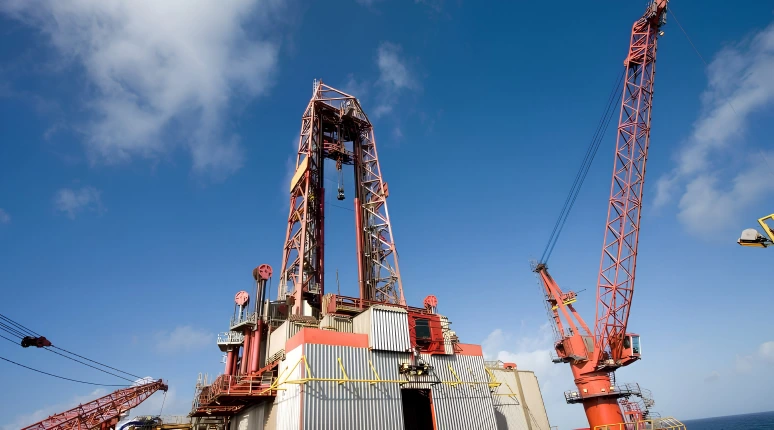
Crane Rigging: Equipment, Safety Checks and Practical Guidance
Written by: Brett Penn, Keble’s Trading Team
Reviewed by: Keble’s Trading Technical Team
Updated: 31 July 2026
TL;DR
- Crane rigging is the practical work of preparing, connecting and controlling a load so a crane can lift and move it safely.
- The right lifting gear depends on the load weight, shape, lift points, centre of gravity, environment and documentation requirements.
- Rated, labelled lifting components matter. Commercial hardware should not be treated as lifting gear.
- Check rigging gear before each use, keep tags and records readable, and arrange formal inspections based on site policy, use and conditions.
- If the gear, rating, certification or application is unclear, ask for advice before the lift, in person at a Keble’s branch or by phone.
Crane rigging is where a lift either starts with control or starts with risk. The crane may do the lifting, but the rigging decides how the load is connected, balanced, supported and guided.
For site managers, project engineers, crane operators, maintenance crews, fabricators, transport operators and manufacturing site teams, the main question is not just “Can this lift the weight?” A better question is: “Is this the right rigging setup for this load, this site and this job?”
Keble’s Trading has supplied lifting equipment, rigging hardware, wire rope, slings and hoisting gear from four branches across Melbourne, and Australia-wide, for more than 36 years. This guide explains the practical checks that help you ask better questions before a lift, without replacing site-specific advice from a qualified person, engineer, crane company or safety authority.
What is crane rigging?
Crane rigging is the process of preparing, connecting and controlling a load so a crane can lift, move and place it with control.
In practical terms, it includes:
- identifying the load weight and shape
- choosing suitable lifting points
- selecting slings, shackles, hooks, links or lifting devices
- checking working load limits and tags
- considering sling angles and load balance
- attaching the load correctly
- communicating with the crane operator
- guiding and controlling the load during the lift
Rigging is not just “put a sling on it and lift”. A small change in load shape, lift angle, sling type, hook position or centre of gravity can change how the whole lift behaves.
For Victorian workplaces, WorkSafe Victoria is a key starting point for crane, hoist and winch safety guidance. Where dogging, rigging or other high-risk work licensing applies, the work should be handled by people with the right competency for the task.
Victoria’s WHS laws are harmonised with the national model developed by Safe Work Australia, though WorkSafe Victoria remains the regulator that actually enforces this in Victorian workplaces. Behind the regulations sit the technical standards: AS 1418.1 covers crane design, while the AS 2550 series covers safe use, maintenance and inspection, with equipment-specific parts such as AS 2550.3 for bridge and gantry cranes overriding the general requirements where they apply. CICA’s standards guide is a useful plain-English summary if you want more detail on which part applies to your equipment.
Why does proper crane rigging matter?
Proper crane rigging matters because the lifting gear carries the consequence of every poor assumption.
A load that looks simple on the ground can become difficult once it is suspended. If the weight is wrong, the centre of gravity is misread, the lifting points are unsuitable or the wrong hardware is used, the result can be a damaged load, damaged gear, a site delay or a serious safety incident.
Good rigging practice helps reduce the risk of:
- dropped or shifting loads
- overloaded slings or fittings
- damaged hooks, shackles, chains or wire rope
- crushed or unstable loads
- failed site inspections
- undocumented lifting assemblies
- lost time while gear is replaced or retested
Keble’s has seen customers run into problems when lifting gear arrives on site without the right documentation, rating or tags. In one customer-assistance example, a contractor dealing with a strict site safety check needed undocumented lifting gear reviewed and replaced with traceable, suitable components before work could continue. The lesson is simple: the paperwork and the hardware both matter.
Not sure whether your rigging gear is suitable? Don’t wait until the crane is on site. Bring the tags, photos or documentation you already have to your nearest branch:
Dandenong (03) 9794 5570, Campbellfield (03) 9357 9611, Laverton North/Sunshine West (03) 9314 4599, or Kilsyth (03) 9761 4125.
Or reach us Australia-wide on 1800 067 687.
The team can help compare product options, documentation requirements and practical next steps before the lift.
What equipment is used in crane rigging?
Crane rigging equipment can include slings, shackles, hooks, chains, wire rope assemblies, clamps, blocks, pulleys, and other rated lifting components.
The exact gear depends on the lift. The table below gives a practical overview.
| Equipment | Common role in crane rigging | Practical check |
|---|---|---|
| Chain slings | Lifting heavy or rugged loads where chain is suitable | Check tag, grade, WLL, hooks, links, wear and deformation |
| Webbing slings | Lifting loads that need a softer contact surface | Check label, WLL, cuts, abrasion, stitching, chemical damage and heat exposure |
| Round slings | Lifting loads where flexibility and load contact matter | Check sleeve damage, tag readability and manufacturer instructions |
| Shackles | Connecting slings, hooks, lifting points and load hardware | Use rated shackles only for lifting, and check pin fit, wear and markings |
| Hooks and links | Connecting lifting assemblies and load points | Check latch condition, distortion, cracks, wear and compatibility |
| Wire rope assemblies | Lifting, pulling or supporting loads where the construction suits the application | Check construction, fittings, broken wires, kinks, corrosion, tags and documentation |
| Lifting clamps | Lifting plates, drums or other specific load types | Check capacity, jaw condition, application limits and load orientation |
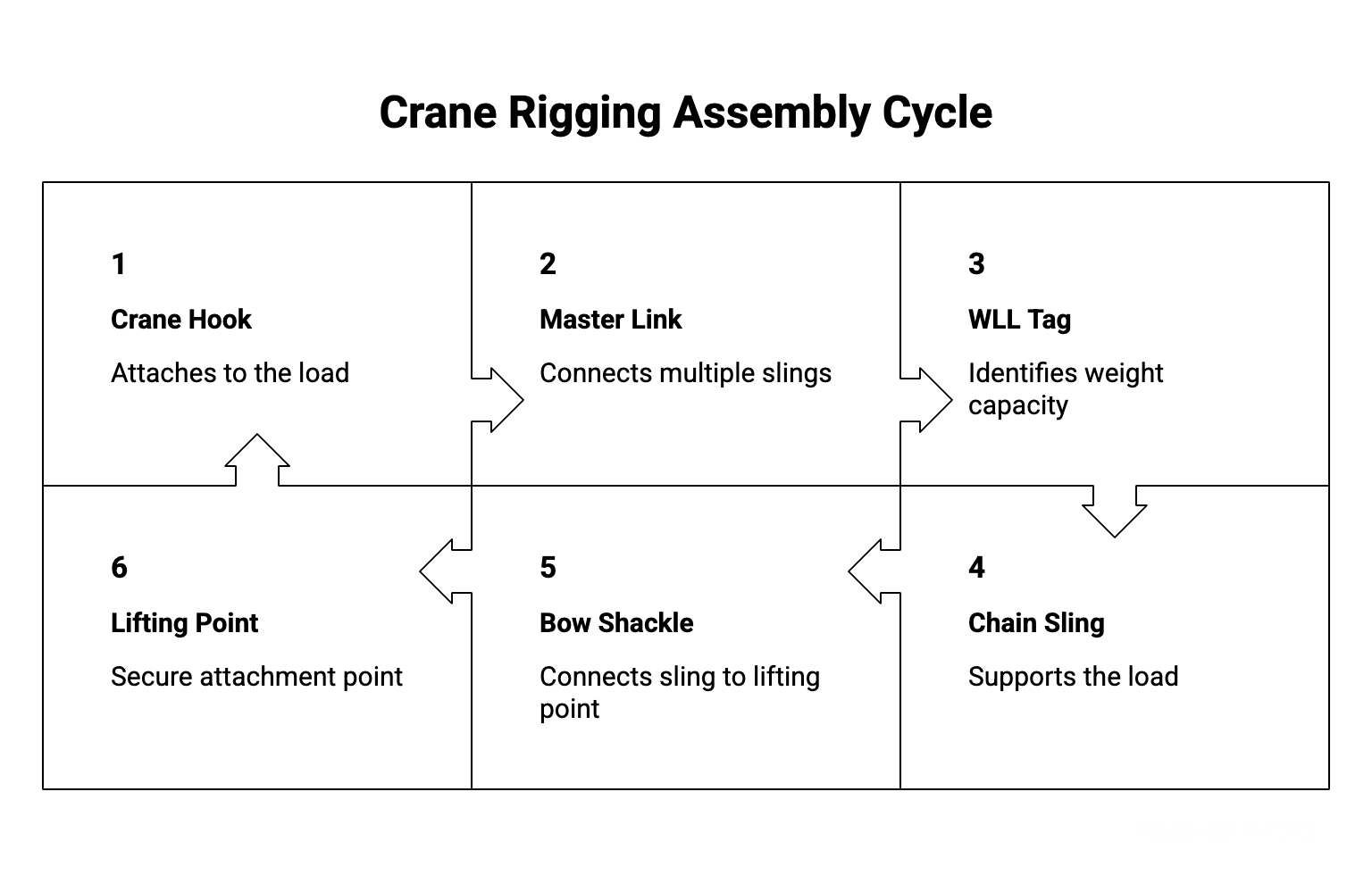
Keble’s stocks broad materials handling gear, including chain slings, webbing slings, shackles, chain, pulleys, trolleys, blocks and related lifting components. Product selection still depends on the actual lift, not only the name of the item.
Chain slings sit under their own standard, AS 3775, covering design, proof-testing and safe use, with the chain itself governed by AS 2321 and the attached fittings, hooks, shackles and master links, covered by AS 3776.
How do you choose crane rigging equipment for a lift?
Choose crane rigging equipment by starting with the load, then matching the gear to the load weight, lift points, angle, environment and documentation requirements.
Before choosing gear, confirm these details:
- Load weight. Do not guess. Use drawings, weighbridge data, manufacturer information or another reliable source where possible.
- Working load limit. Breaking strain is not the same as working load limit. Use the marked WLL and follow the relevant product information.
- Centre of gravity. A load with an offset centre of gravity can tilt once lifted. That changes how the load shares force across the rigging.
- Lift points. The attachment points need to suit the lift. Do not assume a convenient hole, bracket or welded point is a rated lifting point. Keble’s has worked with engineering and fabrication customers whose machinery had no standard lifting points at all, matching thread sizes, material grades and load specifications to fabricate or cut hardware to the specific job rather than forcing a generic component to fit.
- Sling angle. Sling angles can increase the force on each leg of the rigging. If angle calculations matter, use competent lift planning and current source material rather than rough mental maths.
- Load surface. Sharp edges, abrasive surfaces and awkward shapes can damage slings or concentrate force. Alloy chain slings can gouge a polished or delicate surface, while a synthetic webbing sling dragged across a sharp steel edge can tear without warning. Matching sling material, chain, webbing or round sling, to the load surface and adding edge protection where needed is a common adjustment Keble’s makes with customers over the phone.
- Environment. Heat, chemicals, corrosion, outdoor exposure and repeated use can affect product selection and inspection frequency.
- Documentation. Some sites require current tags, certificates, batch numbers, inspection records or traceability before lifting gear can be used.
If several of these details are unknown, treat that as a warning sign. The safest next step is not to buy whatever looks close. It is to confirm the lift requirements with the right person and choose gear that matches the actual application.
What should be checked before lifting?
Before lifting, check that each rigging component is rated, readable, undamaged, compatible and suitable for the planned lift.
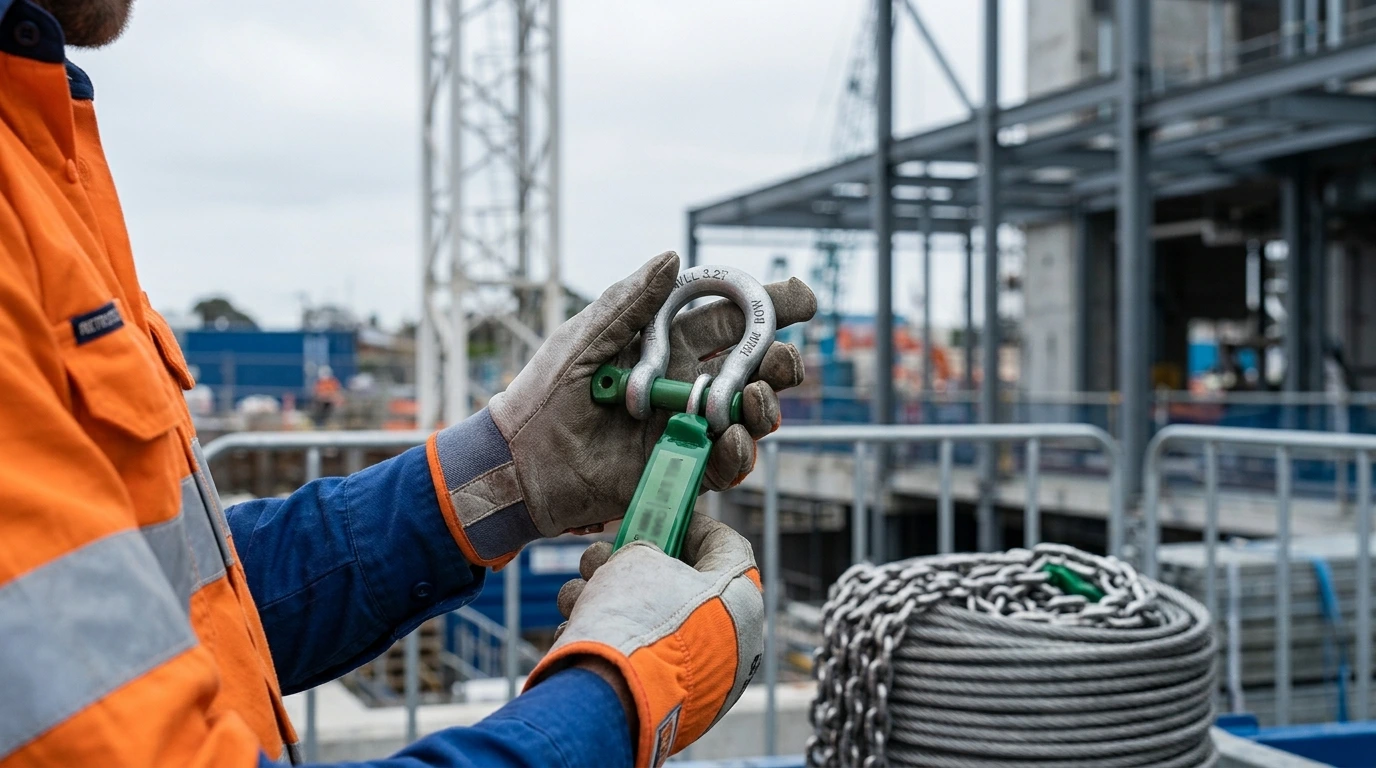
A practical pre-lift check should include:
- Is the tag or marking readable?
- Does the WLL suit the planned lift?
- Is the gear intended for lifting, not general hardware use?
- Are shackles, pins, hooks and latches in good condition?
- Are slings free from cuts, abrasion, heat damage or chemical damage?
- Is wire rope free from severe kinks, corrosion, crushing or broken wires?
- Are chain links free from stretching, gouging, twist or deformation?
- Are all components compatible with each other?
- Has any component been replaced since the last certification or inspection?
- Does the site require current inspection records or test documentation?
As a practical baseline, Keble’s internal technical guidance is to visually check rigging equipment every time it is used. A formal inspection at least every 12 months is a general baseline for many items, with more frequent inspection where site policy, harsh conditions or heavier-than-average use demand it.
That timing should not be treated as a universal rule for every product or site. Manufacturer instructions, site procedures, regulator guidance and the condition of the gear can all require a more conservative approach.
If a tag is missing, a component looks doubtful, or you simply want a second opinion before the lift, any of Keble’s four Melbourne branches can take a look at what you’ve got and talk through the options.
Dogging, rigging and crane operation: what is the difference?
Dogging, rigging and crane operation are related tasks, but they are not the same job.
In plain English:
- Crane operation is operating the crane.
- Dogging usually involves slinging loads, selecting lifting gear and directing the crane operator where judgment is needed.
- Rigging can include setting up and dismantling structures or equipment used to move loads, depending on the work type.
WorkSafe Victoria publishes guidance on dogging techniques and crane-related work. If a task involves high-risk work licensing, site safety procedures or formal lift planning, use the right qualified people rather than relying on a blog article or product catalogue.
In Victoria, rigging sits under a tiered high risk work licence structure: Dogging (DG) first, then Basic Rigging (RB), Intermediate Rigging (RI) and Advanced Rigging (RA), with each licence a prerequisite for the one above it. WorkSafe Victoria lists the current scope for each class on its licence classes page.
For buying gear, the practical takeaway is this: product supply and lift execution are different responsibilities. Keble’s can help with suitable product options and practical guidance, but the person planning and performing the lift remains responsible for the site-specific method, competency and compliance checks.
Common crane rigging mistakes Keble’s sees
Keble’s works with trade, industrial, construction, maintenance, manufacturing and infrastructure customers who often need more than a part number. The same mistakes come up often.
Treating breaking strain as working load limit
Breaking strain and WLL are not interchangeable. If someone chooses gear based only on a breaking strain figure, they may misunderstand the usable capacity of the component or assembly.
Using commercial hardware for lifting
A standard commercial shackle, hook or fitting should not be treated as lifting gear just because it fits. For lifting, use appropriately rated shackles and labelled components that suit the application.
Replacing one component and assuming the assembly is still certified
Changing a hook, link or other part can affect the certification status of the whole assembly. In some cases, the full assembly may need to be checked, retested and re-tagged.
Choosing wire rope by diameter alone
Wire rope construction matters. Diameter alone does not tell you whether the rope suits lifting, bending, winching, static support or repeated cycling. Keble’s wire rope guide covers the construction differences in more detail.
Keble’s has helped customers avoid premature rope failure by matching wire rope construction to the job rather than selling whatever diameter sounded right over the phone.
Ignoring the environment
Outdoor exposure, coastal air, chemicals, heat and abrasive surfaces can change the product choice. They can also change how often gear should be inspected.
When should you ask for help with crane rigging gear?
Ask for help when the load, rating, documentation, compatibility or inspection status is unclear.
That includes situations where:
- the old tag is missing or unreadable
- the gear has visible wear or damage
- a component has been replaced
- the site requires current documentation
- the load has unusual shape or balance
- the lift involves sharp edges or awkward contact points
- you are unsure whether hardware is rated for lifting
- you need to compare chain, webbing, wire rope or hoisting options
Keble’s does not replace a lift planner, engineer, crane company, safety manager or regulator. The team can, however, help you narrow the product options and avoid obvious mismatches before you commit to gear.
For product guidance, call your nearest branch: Dandenong (03) 9794 5570, Campbellfield (03) 9357 9611, Laverton North/Sunshine West (03) 9314 4599, or Kilsyth (03) 9761 4125. If you’re outside Melbourne, contact Keble’s on 1800 067 687 with the load details, photos and any documentation you already have.
If you’re still researching and not ready to call, the FAQs page covers common product and sourcing questions.
How can Keble’s Trading help with crane rigging gear?
Keble’s Trading helps customers source and compare rigging, lifting, wire rope and hoisting equipment for trade and industrial applications.
Professional rigging crews and crane hire operators in particular rely on this for stock certainty: knowing shackles, turnbuckles and slings are in stock, backed by full material traceability and batch documentation, without having to re-explain the job from scratch each time.
Depending on the job, the team can help with:
- lifting and rigging product selection
- chain slings, webbing slings, shackles and lifting components
- wire rope and fittings
- product testing and inspection services
- load testing capabilities
- mill certificates on wire rope where available
- tested, tagged and certified lifting assemblies where applicable
- practical guidance on product suitability questions
Keble’s has four branches spread across Melbourne, Dandenong (03) 9794 5570 in the south-east, Campbellfield (03) 9357 9611 in the north, Laverton North/Sunshine West (03) 9314 4599 in the west, and Kilsyth (03) 9761 4125 in the outer east, so there’s usually one within reach of the job.
The business also supports Australia-wide wire rope supply and selected industrial supply services.
The important boundary is this: Keble’s does not provide engineering certification, installation approval or compliance sign-off for customer designs or site methods. For those decisions, speak with the relevant qualified professional or authority.
FAQ
What is crane rigging?
Crane rigging is the work of preparing, connecting and controlling a load so a crane can lift, move and place it. It includes choosing suitable lifting gear, checking ratings, attaching the load, considering balance and communicating during the lift.
Is breaking strain the same as WLL?
No. Breaking strain is not the same as working load limit. For lifting, use the marked WLL and the product or assembly documentation that applies to the actual gear.
Can any shackle be used for lifting?
No. A shackle should only be used for lifting if it is rated, marked and suitable for that lifting application. Commercial hardware should not be treated as lifting gear.
How often should rigging gear be inspected?
Give rigging gear a visual check before each use. As a practical baseline, arrange formal inspection at least every 12 months, or more often where harsh conditions, heavy use, site policy or manufacturer instructions require it.
Do I need a licence for dogging or rigging work?
Some dogging, rigging and crane-related tasks require specific competency or high-risk work licensing. Check the current regulator guidance for your state or territory and follow your site procedures.
Can Keble’s certify my lifting assembly?
Keble’s can provide testing, inspection and tagging services where applicable. If a component has been changed or the assembly status is unclear, the full assembly may need to be checked, retested and re-tagged. Keble’s does not provide engineering certification or site compliance sign-off.
Final practical takeaway
Good crane rigging starts before the hook is loaded. Confirm the load, choose rated gear, check the condition of every component and get advice when the application is not clear.
If you need help comparing slings, shackles, wire rope, chain blocks or other lifting gear, call your nearest Keble’s branch, Dandenong (03) 9794 5570, Campbellfield (03) 9357 9611, Laverton North/Sunshine West (03) 9314 4599, or Kilsyth (03) 9761 4125, with the load details and site requirements. Outside Melbourne, contact Keble’s on 1800 067 687.
A short conversation before the lift can save a much bigger problem on site. You can also read what other trade and industrial customers have said about working with Keble’s on the testimonials page.
DISCLAIMER CLAUSE: It is the responsibility of you, our customer, to ensure that items purchased for your lifting application meet all relevant statutory regulations. Our staff are not qualified to engineer your final design. Please contact relevant authorities and seek independent engineering advice PRIOR to the purchase of all fittings to ensure compliance for your specific application.
All swaged wire rope and chain assemblies are unsuitable for lifting or any other load-bearing application whatsoever unless otherwise stamped or tagged. It is the responsibility of you, our customer, to ensure any items purchased for structural or load-bearing applications are fit for purpose and the intended use. Seek independent engineering advice if needed.
About the author
Brett Penn is a writer working with the Keble’s Trading Technical Team, focusing on stainless steel handrails, wire rope systems, lifting applications, rigging hardware and industrial product applications. The Keble’s Trading team works closely with stainless fabricators, engineers, trades, installers and industrial customers across commercial, industrial and infrastructure projects throughout Australia.
Editorial note: This article may be updated periodically to reflect changes to Australian Standards, and industry best practices.
Important note: This article provides general information only and does not replace engineering advice, building approvals, installation review or project-specific compliance assessment. Content provided in this blog article is for general information only and NOT advice or a substitute for building standards or industry codes in Australia.





& OPERATED

EXPERIENCE

PRICES

& SUPPORT
- Monday to Friday - 8:00AM - 4:30PM
- Saturday - Closed
- Sundays & AU/VIC Public Holidays - Closed
No Comments yet!